
Note: The pitch event is open for agents, editors, and publishers. GN creators, you have until 11:59 pm EDT tonight (Oct. 7) to get your pitches in.
E: Elio Pacchioni
W: Josh Wood
N: Nick Jackman
Transcript
E: What is one thing you wish you knew when you started writing, and what is the biggest thing you’ve learned from being a writer?
W: Well that was a long time ago, but I would say that it’s okay to make mistakes. That you should make mistakes. And that by making mistakes you learn more about the thing that you’re writing and you become a better person really. That it doesn’t have to be perfect, cause it’ll never be perfect
E: Do you think the act of writing makes you a better person?
W: Uhm, yes, can I answer that in a weird way? So I don’t draw a lot and that is something I wish I had done and studied more. Like I was always good at writing and I liked drawing and graphics and stuff, but I wasn’t as good at it right away. So if I had allowed myself to be bad and draw more I would’ve gotten better at that, but I was immediately a good speller and that kind of stuff.
E: You were like too caught up on being perfect all the time that you couldn’t really allow yourself to make something really unique?
W: Yeah, I couldn’t be bad at something long enough in a dedicated way long enough to be good at it. And that was really to my detriment. When I draw something, like observational drawing after a session of 20 minutes or 30 minutes, I feel so much more connected to life. Like I feel like a completely different, focused person then if I had been doing anything else. And I do feel that way with writing, I think writing is so ingrained in me that it can be difficult to enter that situation sometimes. But if I spend time looking at the details of something while drawing and really zeroing in on the details I feel like I’m reaching golden-level me
N: What do you consider to be the best thing you’ve written and why?
W: laughs, uhm, that’s really hard.
E: If you want you can zero in on a bit where you were like “I love doing this”
N: Yes, what was the moment where you realized you loved writing?
W: I can tell you, one of the best things I think I’ve ever written is not something that someone else would say was the best thing I ever wrote because no one has published it. There’s a lot I enjoy writing that I’m proud of in different realms. I’ve written a couple novels, one of which I’m really proud of. Some poetry, some comics.
N: Which one of those would you say is your favorite type of writing?
W: I don’t really have one.
N: A little bit of everything?
W: Yeah, I’m a bit of a grab bag guy that way. I just find it a challenge to write in a different mode. Some things come out differently and I can put it in a different medium, they get expressed differently. It’s a good exercise to move something from a story to a stage or from a story into a comic. It’s actually very helpful to know where to cut away some excess details.
E: So, what do you think is the most important part of a story? Or do you think without this element a story would feel flat and fall apart?
W: I would say character. Your audience has to know the character or want to know the character or identify with them somehow. Without some compelling character that you believe in, it’s not going to work.
N: What is your general process to research new topics you’re writing about?
W: Probably not as rigorous as it should be. You could say it’s in the moment. Or things I come across. There’s this interesting quote from Robert Frost I’ll paraphrase it he says, a poet is someone walking through a field and picking up stickers and burs as they go along and these stickers and burs are a chance that things you’d want to write about. I’m a big believer in chase operations, you set up certain scenarios and see what happens and kind of just go with that.
E: Here’s a fun question, what are your writing pet peeves? It can be in your own work or others.
W: I guess I could say redundancy? In ideas.
N: Is that with the same person with the same ideas? Or does that stretch to cliques in various books?
W: I think people complain about tropes, but also love them. I don’t have a problem with them.
E: They work for a reason.
W: Yeah exactly. It’s like we love to hate them.
E: You could also turn those tropes on their head too.
W: That’s fun, you know, maybe when someone’s doing a very lazy version of the trope. But what I meant more is like, within a story, somehow the same scene is occurring with slightly different characters, or the character’s voices are the same.
N: What is your definition of good writing?
W: Good writing will transport you somewhere else for a period of time.
E: Any advice for being a writer and artist in this new world? Of course with the new rise in AI and things that constrict artists in the industry, what do you think is the best way to navigate that?
W: I don’t have any technological prescriptions. I know that some writers secretly or not so secretly use AI as “thought partners” and that might have value or it might not. I think the skills of being a writer stay the same whether we have AI or not. I think one of the under-appreciated skills is resilience. It’s tough to be genuine and vulnerable and honest repeatedly. And that’s what a genuine artist will do, be flawed, be wrong, and obviously learn from that by putting yourself into the world over and over again. If you’re content to hide whether that’s behind AI or cliques or stories we’ve already heard before, it’s not really genuine. And we all have our own definitions of success, it may not be monetary. And most often it will not be monetary. And those artists that do make a lot of money, you can still point out those flaws and holes, not all of them, but most. A lot of artists have to find their definition of success and keep pushing themselves to make the next story or the next collaboration.
E: I mean, AI will never be able to replicate the human experience, so that is something.
N: Hopefully.
E: Yeah hopefully, but I mean the rawness of it.
W: But yeah, I have to take all these AI sessions as a teacher and as educators we have to do it. And I was thinking, who’s going to listen to an AI generated relationship song. And we think, oh yeah it won’t be genuine. But I think that slope already exists and a lot of people will love it. Like if you turn on the radio, you’re going to get the same ten songs every other hour over and over on almost every radio station. Unless you listen to college radio (yes), or public radio that is not commercial driven. All that soulless worries we have about AI are already here, they’ve been here since commercialism began.
E: Corporate.
W: Yeah, corporate and AI are really interchangeable. If you want to be genuine, funky, or interesting and artistic, you have to find this other path. And it exists right now. There’s the old saying, it’s the Hollywood business, right? It’s the movie business. And the business part gets movies made. And I’m sure all of us could have thousands of hours of really horrible movies. And you think, “how did this get made, this is ridiculous, this is trash,” but somebody made it.
N: Somebody made it and somebody watched it.
W: Yeah, and that’s the business part of it. But then you find something really interesting on the other side, like Minari. It was not a giant commercial success, and I think that is what you have to go for sometimes
E: I heard this artistic advice one time that was like, make your stories specific, and they will find someone.
W: That is true. The specific becomes universal.
N: Here is a vague question, any advice for handling artist/writer block?
W: Well, I could say the cliches of “just write through it”, personally I usually go exercise. Usually I am sort of stuck mentally, I can’t just go write. I have to work my body out in some capacity maybe for a few days, just something physical and I realized that kept me balanced.
E: What makes you want to create something most? What makes you feel that “pull” to write, what brings you to that place.
W: Aside from dreams, I think when I am around cool interesting people, with different ideas. Also if there is a situation I do not understand or feel troubled by, then I will want to go and dive into that.
N: What is your process for editing a piece after a first draft, and what do you recommend others do to edit their work, specifically in Graphic Novel Writing?
W: I think one of the cool frames of a graphic novel for me, or a comic, is the visual art. I think the visual art of a comic is more important in some ways than the speech writer, because they are the signature of the whole thing. I think traditionally there are a lot of writers who say the opposite, and convince digital writers of the opposite, even the audience, but I don’t believe that at all. I am a big fan of old school clowns, and one of the cool things about clowns is how they can communicate without words, and you stare at them, you watch them. Clowns can cut across cultures. One of my favorite examples is C3-PO and R2-D2 from Star Wars.
N: They can have a lot of personality and character without talking.
W: Exactly. One of my favorite challenges is to write a scene with no dialogue, if the reader can tell what I mean with only imagery. One of my editing processes is, no matter what I write, I have too many words at the start. I will always go back and reduce the words. I try to build a big big mountain, and then cut it down. Figuring out the quickest path through the mountain. For comics especially that is more severe, really trying to crystalize the language, because you can really pinpoint where a person may be emotionally frame-to-frame if you want certain words to hit a certain person on that page in a certain way, you want them to just feel one thing in one moment, and you have to make sure it is clear to get that.
About Josh Wood

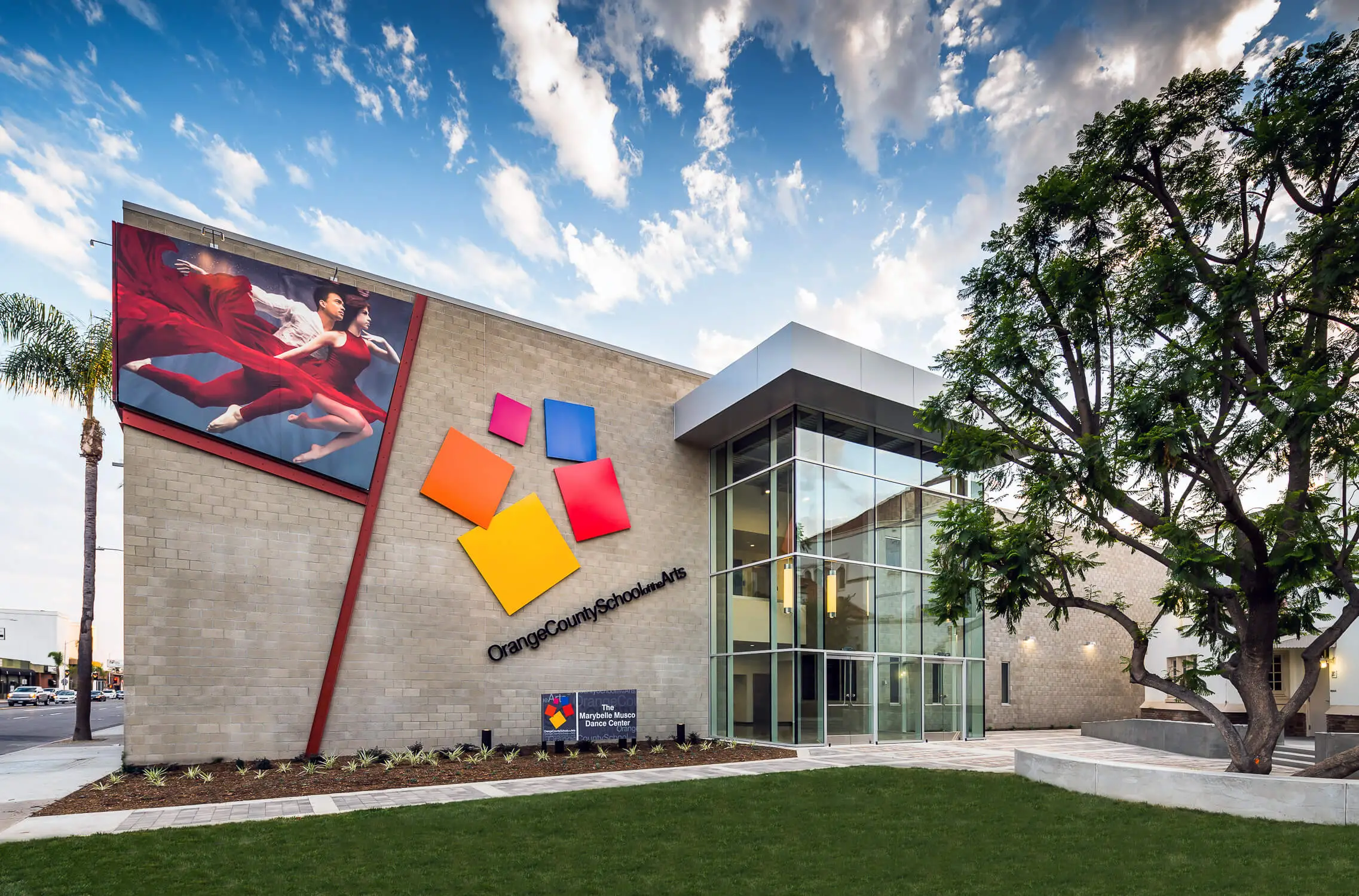
Learn more about OCSA’s Creative Writing conservatory here.