Note: Only one week until the pitch event opens for agents, editors and publishers. GN creators, load your pitches this Saturday, Oct. 3 through Oct. 7. Please our How To Load a Pitch guide. Other helpful tips include an article for illustrators on how to format the art file, a video tutorial for writers on how to attach their bio and script pages, and general pitch tips on how to choose what you add in your art from agent Janna Morishima.
And congrats to Katherine Thorne for winning the Scrivener License for MacOS or Windows!


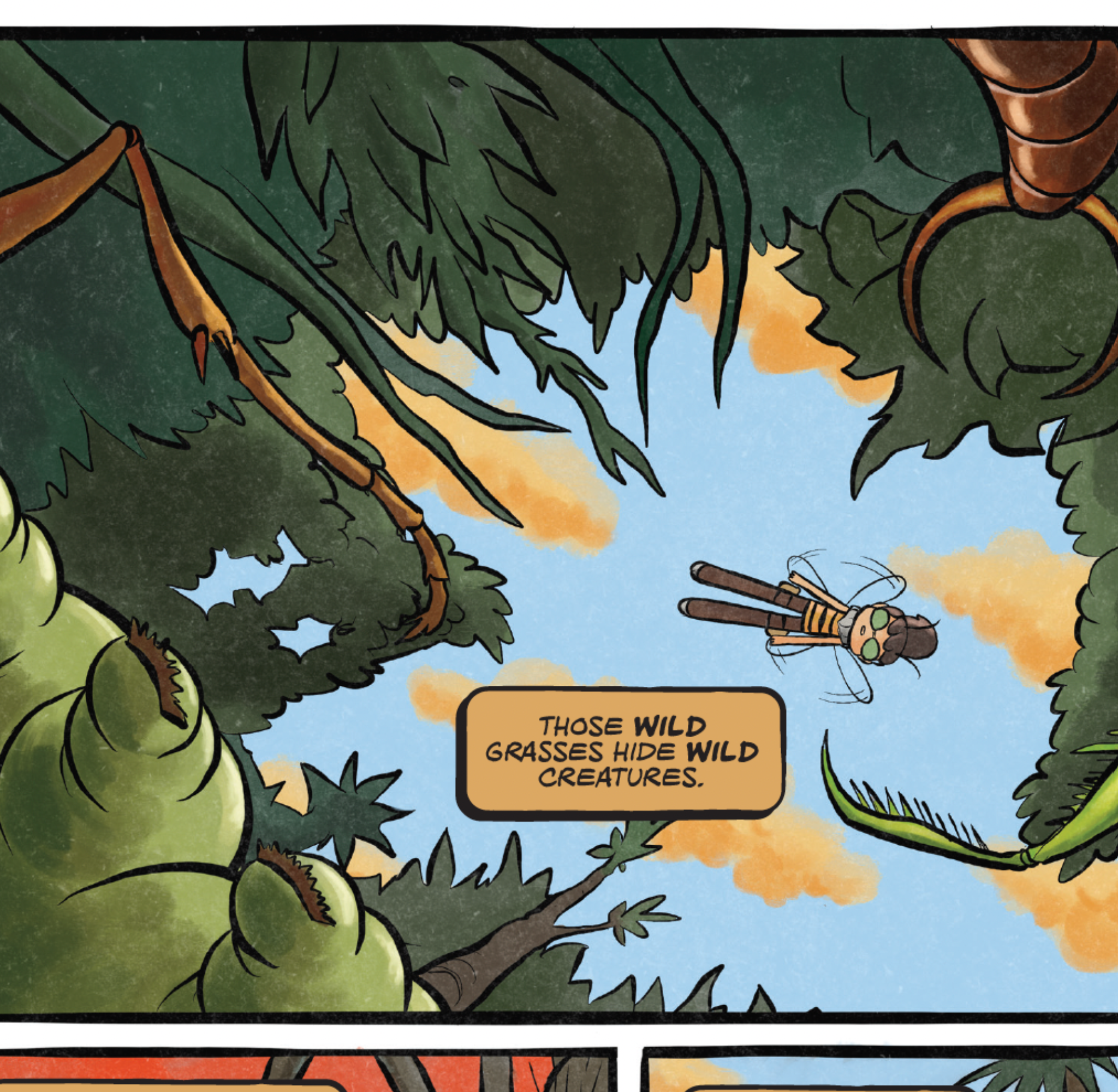
Jonathan (Jon) and Desiree (Desi) St. Amant are the co-creators of the debut middle-grade graphic novel series THREE BEE HONEY, with Jon as the illustrator and Desi the writer.

But there is more to their pairing than their shared passion for visual storytelling. They’re also life partners, the parents of two children, and former educators. Jon taught art in middle school, and Desi taught high school Advanced Placement English Literature and Composition. Their shared backgrounds not only made them a great team for creating graphic novels for youth but their experiences as teachers gave them unique insight into the minds and the interests of today’s young readers.

If you’re curious about Jon and Desi’s journey and know their perspectives as creators, collaborators and educators, this interview is for you!

1. Creators in the publishing industry face many highs and lows. How has being life partners helped you navigate the emotional and professional challenges of creating and publishing a book? Can you share a specific example from your book journey?

DESI: Creative partners really need to trust each other and be able to listen to constructive criticism without taking it personal.
JON: You still grumble when I critique your dishwashing skills.
DESI: Haha, okay, so Jon’s better at dishwashing. But I’m a better cook.
JON: Okay, you got me there. Hmm…a specific example from our book journey…recently, I was struggling with burnout on illustrating book two–there wasn’t much time to celebrate or rest after finishing the first volume of THREE BEE HONEY,  so Desi arranged a family trip to a museum followed by a picnic, which gave me a much-needed break and reset. We also go on daily walks together around sunset.
DESI: Also, being life partners–as well as raising kids together–has helped us build a pretty strong foundation of trust and openness to feedback. The nice thing about living together is that we can talk about our projects all the time. And when we’re on a family trip or outing, that can probably annoy the kids. But they’re used to

2. What have you discovered about each other due to your creative collaboration? Has the publishing process revealed new strengths or ways of working together? Would you do anything differently if you had to start over? 

JON: I’m happy to report that Desi is a team player, willing to make changes to the script when practicality issues come up.
DESI: Yep! And I feel comfortable pushing back with another solution if and when I disagree. Luckily, Jon just wants to make sure we’re doing our best work, so he’s always willing to listen and compromise.
JON: Desi is the more organized one and a natural documentarian, great at remembering to capture footage for behind-the-scenes and promotional content. As far as future books are concerned, however, I would appreciate having less art notes.
DESI: Totally fair. That’s the tricky part of making a graphic novel script out of a prose script–all the descriptions carried over. My subsequent graphic novel scripts for new projects are definitely more simple.

3. In your collaboration, the writing phase places more responsibility on the author, while the illustration phase shifts much of the pressure to the illustrator. How do you support and encourage each other during these periods when one partner is carrying a heavier creative load?

DESI: Our process is kinda like a relay race, where I pass the baton to Jon after I’ve done my part.  When he’s swamped with illustration deadlines and creative projects, I take on more household responsibilities, such as helping with the kids, driving them to activities, doing chores, and cooking. My goal is to let Jon have the time he needs to meet his deadlines.
JON: Ahhh yes, I enjoy sitting on the couch in my pajamas and drawing on my ipad, while Desi makes breakfast, feeds the pets, and deals with the kids. I’m learning to really milk that for what it’s worth, haha.
DESI: Hahah, funny. But then again, we can also operate like two runners on the same team doing a long distance race. So while Jon draws, I’m writing new stories. Right now, while he’s busy illustrating volume 2 of THREE BEE HONEY, I’m working on projects that are completely different. So when he’s done, hopefully at least one of those will be a good place for him to start developing visually. As parents of two teens, we have such little free time to spare, so it’s forced us to be as efficient as possible. Which is a good thing because my perfectionism doesn’t have a chance to take hold.
JON: I agree and will add that it’s easy to get caught up on a current project and put a lot of emotional weight on the success of that one thing. So it helps to build momentum and keep moving forward. Desi tells me about the stories she’s writing, and I’m excited to illustrate the new characters. It’s nice to have that creative overlap, and it gives me something new and refreshing to look forward to every time I’m done with the current project.

4. Did your background in teaching influence the way you created your book? Can you share an example of how your experience in the classroom shaped creative decisions?

JON: I know this is better answered from a writing perspective regarding the content, but artistically, the style in which I draw the characters is similar to how I draw my base poses on my YouTube channel, @Mistersaintamant.
DESI: Having worked with teenagers from middle school through high school taught me a lot about what makes adolescents feel anxious and their desire for belonging and friendship–and really just connection. All of that informed the way that I characterized Claire, Hannah, and Abi as well as the “girl world,” so to speak, in their hive. When I was a young girl, I also experienced what it was like to feel like an outsider among peers and the struggle to fit in. All of those experiences shaped the world we built in THREE BEE HONEY.
DESI: As a teacher, I also worked with many students who struggled with a conflict between their desires to make their family proud by pursuing the “approved” academic and career path and their desire to pursue a goal or a field  they truly felt passionate about.
JON: I can’t tell you how many students I’ve had approach me during my teaching years lamenting about their desire to pursue art as a career or as a serious passion but they would tell me their parents had other plans, whether it was going to medical school or taking over the family business, or being a lawyer or engineer. I’d always tell them that art can be a hobby–something that you come to after a stressful day at work, and it doesn’t have to be a career choice. This ties to one of the themes of this book: how to satisfy your passions while meeting familial obligations and society’s expectations.

5. If your students were to read Three Bee Honey, would they be surprised that you wrote it? Why or why not?

DESI: Because I spent so many years teaching college level literary analysis, my former students probably would have expected me to write something more literary or even academic–perhaps work more suited for a YA or adult audience. While I enjoy writing kids’ books–I’m actually working on a few more–I am actually working on a project that is more YA/adult as well. I guess I’m just exploring all of my creative options. 
JON: I’ll answer this from an illustration perspective. For me, I think my students who didn’t know I was working on a book would be surprised because it’s very girl-coded, having female protagonists as the main characters. They’re used to seeing my CHUBICORN comic as well as my drawings of wizards, ninjas, and monsters. This story would come as a bit of a surprise, but stylistically, it is very similar to how I draw, so I think people can pick up the style cues and recognize me in it. 

6. Three Bee Honey is a story that centers around a character in adolescence. Being teachers who taught a similar age group, did you have any influences you took from your students that carried into the characters or their experiences? What insights do you have on how kids read and engage with art that will help create stories that appeal to youth today?

JON: One thing I noticed regarding the reading habits of my students is that they tended to read up. I remember seeing kids reading Game of Thrones and some other adult fantasy or science fiction novels, so I would expect this book series to be of interest to younger elementary kids looking up to adolescent middle school stories. Knowing that helps with character design and serves as a reminder that just because your protagonist is one age doesn’t mean that someone of the same age will be reading it. We’ve been told of 5 and 6 year olds reading and really enjoying our earlier, crowdfunded version of the book. 
DESI: It kinda goes to show that readers at the kindergarten and first-grade levels are experiencing similar social dynamics, which may be why the story resonates with them.  
DESI: I was definitely influenced by the complex and often tricky social situations that kids find themselves in, both in and out of school. And that carried over in our characters’ lives. Showing Claire, for instance, trying to make friends and floundering, makes the story more relatable for kids who are experiencing that in real life. Also, as an English teacher, I’ve seen firsthand how students struggle to get into reading. And from my experience, graphic novels are a way to keep them engaged with books and hopefully create a longer lasting interest. To that end, I’m really glad that I was able to create this graphic novel to tell a fun story about friendship, adventure, and belonging–while also teaching about bee science. 

7. You guys pitched Three Bee Honey at an online pitch event like KidLitGN, what was that experience like? What was most fun and challenging about making a good pitch? What came of the event? If you could go back in time, what would you change about your pitch?

DESI: This experience was really exciting but also a little frightening because we weren’t hiding anymore–we were putting ourselves out there as serious creators. For publishing industry professionals to see and critique work you’ve put so much of yourself into, that can be intimidating. 
JON: We’ve done a few different pitch events. One of the earliest ones was called “Hot Seat” on Kids Comics Unite, where we had to make a video about our pitch and include work sample pages and the story synopsis. The work was on display for about a week, giving the entire group of comic peers a chance to offer constructive feedback. That was really helpful. It was very nerve-wracking, but that was how we connected with our agent, Janna Morishima, which was awesome.
DESI: Totally. And what’s great about doing these pitch events is that it forced us to make a solid pitch package. To cut the “fat” and really be decisive about what we wanted to show and how we wanted to present ourselves. All in all, it’s a great learning experience for anyone who wants to publish a book. 
JON: The pitchfest that we participated in through KCU was also a great experience because we also got to see everyone else’s pitches. I really enjoy seeing the cool ideas out there. While it’s nerve-wracking to be put in a very vulnerable place, you have to be willing to do that if you’re going to progress in this industry. Sure, you may hear some feedback that you may not like, but that’s part of having your art in the world. You have to be okay with it and be willing to learn from it. 

8. What advice do you have for creators who are considering pitching this year?

JON: First-off, make sure your pitch is clear and enticing. I would make sure everything is ready: the art is as good as possible, your comp titles are thoughtful and relevant, and your synopsis is clear. Ask yourself: does this look professional? And if making a deck, also consider headings for each section or maybe a theme that ties to your book. Be brave. It’s not easy, but you need to put your work out there and be willing to accept feedback and grow from it. You’ve got this.
DESI: I agree with Jon and think it’s also vital to study a variety of pitches in your genre to see what resonates with publishing professionals. I have to emphasize: the illustrations are SO important. It’s what catches the eye, and the concept and writing is what sells it. So make sure your sample art and book cover are really strong. Obviously, the writing has to be solid, so invest time in a critique group you trust to make sure the writing is clear and compelling. Just be open to the feedback–this is a learning process. It’s not an “all or nothing” endeavor. It’s just one step in many steps of a long journey that is your writing career. So hopefully you can feel less pressure and just be open to learning from this experience. 
Thank you, Jon and Desi, for spending time with our community!
If you want to get to know this dynamic duo more, here are their social media handles:
To preorder THREE BEE HONEY, use the links below:
Subscribe
Notify of
guest

2 Comments
Oldest
Newest
Teresa Robeson

Desi and Jon are not only talented, but also the most adorable creative couple! Such a fun interview…and I learned a few new things about them.

Desi

Awww, thank you, Teresa!! <3

2
0
Would love your thoughts, please comment.x
()
x